


Clydesdale Bank - The First One Hundred And Fifty Years
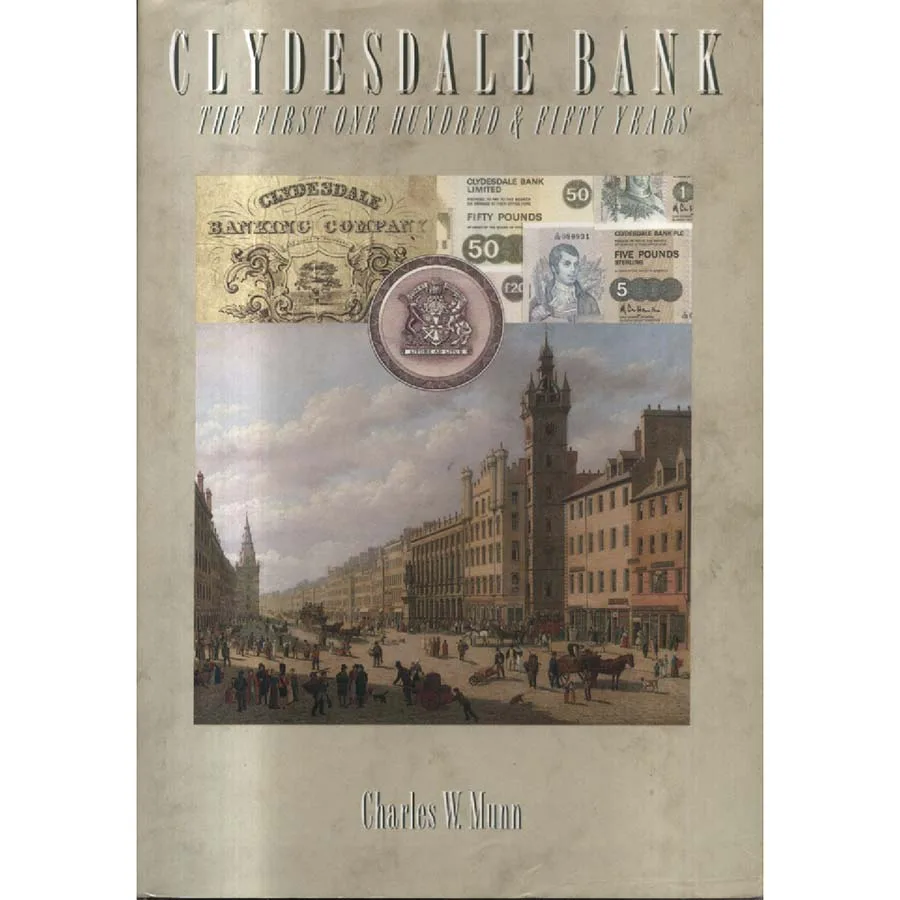
Publisher: Collins
Format: Hardback
ISBN: 0004356578
Bank histories are marvellous things, because they take one of humanity’s least poetic inventions — organised money anxiety — and bind it in respectable cloth.
Clydesdale Bank: The First One Hundred and Fifty Years is the story of a Scottish banking institution doing what banks like to pretend is a quiet business: opening branches, issuing notes, surviving panics, absorbing changes, lending prudently, expanding cautiously, and generally standing in the background of history with a ledger and an expression of controlled concern. C. W. Munn gives the Clydesdale its proper long view, from 19th-century beginnings through a century and a half of commerce, industry, confidence, crisis, signature, seal, balance and statement.
This is not the sort of book in which dragons appear, unless one counts overdrafts. Nor is it full of sword fights, except in the subtler banking sense, where two men in waistcoats disagree over collateral and someone’s future quietly collapses. Its pleasures are more civilised and therefore more dangerous: portraits of institutions, branch networks, changing economies, old banknotes, directors, mergers, policies, cautious decisions made in rooms where the chairs probably cost more than a farm animal, and the slow, steady transformation of local finance into modern banking.
The Clydesdale Bank belongs to that older world in which a bank was not just an app that occasionally refused your card in a petrol station, but a building: stone, columns, brass plates, counters, managers, clerks, and the faint smell of ink, wool coats and disapproval. Money passed through such places with ceremony. Loans were discussed rather than clicked. A bank manager could ruin your afternoon with a sentence delivered over spectacles. It was all terribly dignified, which is how you knew it mattered.
Munn’s account catches the appeal of institutional history: the way enormous social change can be seen not only in wars and elections, but in who needed credit, who got it, what industries rose, what towns expanded, which names appeared on boards, and how confidence — that most mysterious of financial substances — was maintained, repaired, polished and occasionally prayed over. A bank is, after all, a machine for turning belief into paperwork. When the belief holds, everyone calls it stability. When it fails, historians get a new chapter.
There is something quietly grand about a 150-year commemorative volume. It says: we have lasted long enough to commission a serious book about ourselves, which is no small thing in a world where most enterprises vanish without leaving so much as a drawer of headed notepaper. It is corporate history, yes, but the proper old kind: sober, detailed, locally rooted, and unlikely to contain the phrase “brand journey” unless under legal compulsion.
This Collins edition is in Very Good condition, which is almost suspiciously appropriate for a bank book: tidy, respectable, and giving the impression that it has kept its accounts in order. Crappy Old Books offers it for readers of Scottish history, banking history, institutional histories, financial nostalgia, or anyone who likes the idea of money before it became mostly invisible and started living inside passwords.
Keep browsing: See more History books Other books by CW Munn
